"These boots are made for walking..."
- Jan 5, 2024
- 4 min read
Updated: Jun 14, 2024

If you ever had a blister, you probably do not need to read a blog post about the importance of buying and wearing the right boots. However, if you are one of the innocent or the lucky ones, read on, and your feet may thank you. Contrary to what you may think, buying a right pair of boots is not an easy matter. There are different types of footwear for different hiking activities and seasons, and all have their pros and cons.
Hiking boots
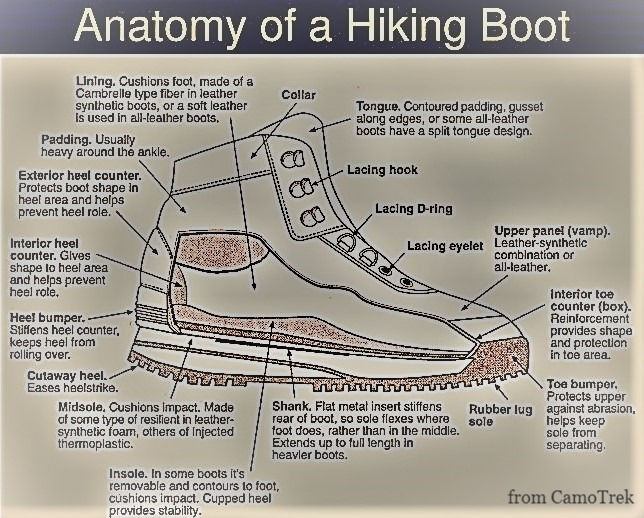
Hiking boots are semi-rigid above the ankle boots that are laced up to provide ankle support and fitted with a good grip Vibram sole. There are a few things to consider when buying your walking boots. These are:
The uppers. Hiking boots can be made out of fabric or leather. Fabric boots are lighter and tend to be more breathable which makes them a better choice for spring and summer walks. They do need to be waterproofed more often. Most hiking boots these days come fitted with a waterproof membrane (either Gore-Tex or eVent) which helps keep the feet dry. In mind that in some boggy areas, such as parts of the Cheviot hills, the ground is quite acidic which over time can damage the stitching. If you have fabric boots, remember to give them a good wash after every walk to prolong their lifetime. Leather boots are heavier and less breathable but they are more durable. They are are relatively easy to maintain and you only need wax or shoe polish to keep them protected. A hybrid variant of the two are the split-grain leather boots in which the leather is paired with a nylon mesh to reduce weight and increase breathability. These are not as durable as leather shoes and usually come with waterproof liners.
The midsoles. Midsoles provide cushioning, help absorb impact, and determine how stiff the boots are. Boot stiffness is important, depending on the terrain tat you are likely to hike in. Stiffer boots will protect your feet from abrasions, and stony uneven ground. Stiff boots are also important for winter walking (we will write more about it another time). Midsoles are commonly made out of EVA (ethylene vinyl acetate) of varying densities, or polyurethane which is firmer and more durable.
The shanks. The shanks are made from metal or strong nylon and vary in length; some cover the entire length of the midsole, while others only half. Shanks support the arch of the foot and determine where the sole bends.
The outsoles. These are made of rubber, sometimes with additives such as carbon to increase stiffness. Outsoles are fitted with lugs which increase their grip and provide traction. The deeper the lugs, the better the grip. They often also have a clearly defined heel zone, known as the heel brake that prevents slippage on steep descents.
Hiking shoes
The hiking community has been divided for decades now as to whether the hiking boots are actually necessary, especially in the less rocky mountains such as the majority of the English hills. The arguments against using boots are that the boots are heavier and more rugged therefore eroding the ground more, that feet sweat in them more leading to blisters and that the constant ankle support actually leads to legs and feet that are eventually less stable. Hiking shoes are a compromise that bypasses some of these worries. Whilst we wouldn't advocate wearing them in the deepest winter, they actually are a good alternative for the summer months. Several models come equipped with handy hooks for gaiters, protecting your feet from mud and dust. Hiking shoes are made of fabric, and can be insulated and fitted with a waterproof membrane. They have grippy rubber soles similar to those of the hiking boots, but often slightly more flexible.
Trail running shoes
An even lighter variant are the trail running shoes which are often not waterproof but made from quick drying fabric instead. They have thinner more flexible soles but still offer good grip. They provide even less ankle support than the hiking shoes, and are not padded so they will protect your feet less in the rough terrain.
Barefoot shoes
Barefoot shoes are extremely lightweight. they are made from thin quick drying fabric and have a wide toe box not to constrict your foot. They also offer less grip in the heal area so if you are not used to them they may feel really unstable at first. They often have very thin soles that makes them unsuitable for cold conditions and rough terrain. Barefoot shoes are zero drop shoes which means that there is no height difference between the front and the back of the foot and no arch support. Whilst they can improve your feet, they are also not suitable for everyone. if you are planning to try them, break your feet in gently, starting with a few hours a day, before you embark on a full adventure.
Size matters
When you buy your hiking boots, make sure that they are a size bigger than your feet. Your feet will swell during the walk, especially if you are carrying a heavy pack. it is also good to allow some room for the thicker hiking socks. If you are trying the boots on in a shop, try to do it either late afternoon or in the evening when your feet are a bit bigger. Sit down and push your foot to the back of the boot before lacing it up. Make sure that the boot grips your heel well and that your foot is not moving in the boot too much. Most shops have small artificial inclines where you can test the boots before purchase.
Hooks and laces
There is an art to lacing the boot correctly. Your boots come with eyelets and hooks, most likely including some extra ones around the ankle area for extra stability. Try different lacing techniques to see how they change the grip of your boot, and find a configuration that suits you best.

Comments